Rabu, 16 Mei 2012

Some Tests Complete on Sukhoi Engine Upgrade


Some Tests Complete on Sukhoi Engine Upgrade

Russian aero engines maker Salut has completed the climatic bench tests of new AI-31FM2 turbojet engine,
which is a further development of the Al-31FM that powers the Sukhoi Su-27 fighter family. These tests have confirmed the static thrust increase of 4,080 lb. to 32,000 lb., compared with the basic engine. It also produces 2,200 Ib. more thrust than the Al-31FM1, an earlier upgrade.

An improved Iow·pressure turbine and fuII·authority digital engine control system are behind the FM2 improvement. Also, the engine has an assigned life of more than 3,000 hr. “The modernization of the Al-31F engine is being conducted without changing its size.

It is aimed at providing a chance to reengine the whole fleet of Su-27s without changes to the airframe or nacelles, says Salut’s acting chief designer, Gennady Skirdov. The engine will be shown for the first time at an industrial show at the Zhultcvsky flight-test center this summer. Flight trials are to start by early 2013. The manufacturer hopes that the Russian air force will select the engine to power Su-27SM3 fighters and Su-34 bombers.

Selasa, 10 April 2012

Revamping Revealed ,Air France


Revamping Revealed 
Lufthansa, Air France and other European  carriers ponde major overhauls 

That the face of Europe’s network carriers is changing has been clear for some time, but even those in the drivers’ seats are wondering just how deep those changes will go. The process will take time to sort out. Air France signals that there will be significant shifts in the next three years, although some progress is already noted. Lufthansa, for instance, is a step closer to shedding BMI British Midland a financial albatross for the German carrier; now that the European Commission has green-lighted the proposed takeover by British Airways’ (BA) parent, International Airlines Group (IAG).

 Air France may have been late to the game in dealing with major structural changes, but it is becoming more aggressive and expansive with what its "Trans- form 2015" agenda is supposed to deliver:New vectors are planned for everything from the long-haul business, to the troubled short- and medium-haul sector, and its Transavia low-cost venture.

 Freight and maintenance, repair and overhaul activities also are being targeted. But the turnaround will not be easy.Air France warns that "drastic" cost reductions will be needed to maintain its medium- and short—haul operations as it tackles its fiscal disarray. The airline’s goal is to reach a 20% reduction in controllable costs. 

A frame work agreement is in place with unions to negotiate new terms that will allow the significant changes to go forward, although the prospect of union unrest has not been dispelled. A key pilots’ union points out that the changes cannot just be about cutting costs, but also need to offer growth prospects. And, a union official emphasizes, no agreements to contract terms have been agreed to yet. 

Air France only has to look to Iberia to see how disruptive big structural changes can be. Pilots have staged numerous strikes to protest that carrier’s new entity Iberia Express. But Air France CEO Alexandre de Juniac leaves no doubt that significant  changes are in the cards. "The 20% cost-reduction objective is a minimum threshold; to fall short would jeopardize the recovery and the company’s future.

These equally shared efforts must be implemented without delay." Closer integration with sister company KLM is being targeted, as is stream lining the organization to reduce over head and make it more responsive.Core elements of the day-to-day opera tions are also up for an overhaul. The medium- and short-haul business has long been a headache for Air France, given the competition from high-speed rail and low fare rivals.The target date is now 2013 to reach a break-even point for at least the point-to-point elements of the service.

The entire short- and medium-haul operations should break even a year later. Exactly how this will be accomplished has not been settled. But the parent air line intends to gird its low-cost venture, Transavia, to combat low-fare rivals.Also, Air France aims to standardize its regional operations with various subsid- iaries. But, the airline states in updating its "Transform 2015" plan, "additional savings still must be found to reach the break-even point in 2014.

"The long-haul service, which has been the airline’s one bright spot for several years novig also is under going scrutiny Air France states: [We] must find ways to better respond to growing leisure travel demand," and notes that long haul upgrades are contingent on success of the savings plan. Survival of Air France’s short- and medium-haul operations is contin gent on meeting key cost targets.In the freight business, greater integration of Air France,KLM and Martinair services is being sought.

The maintenance operation also is under fire, with management saying "competitiveness in major overhaul maintenance is wholly inadequate." The engine and equipment maintenance operations, specifically are being eyed for restruc turing. The company’s goal is to become the second-largest player globally More details on Air France’s plans are due mid-year. Meanwhile, Lufthansa must decide how to deal with BMI Baby, the low-fare adjunct of BMI. The EC approved the sale of BMI Baby to IAG when the latter agreed to shed 14 daily slot pairs at London Heathrow Airport.

The slots are on routes where BA and BMI have competed, such as to Aberdeen or Edinburgh, Scotland, and, long-haul, to Riyadh, Saudi Arabia; Cairo, Egypt; Nice, France; and Moscow. Moreover, other carriers will receive access to seats on the BMI/BA short- and medium-haul aircraft "on normal commercial terms" to accommodate their transfer passengers. 

This is being done to make sure that "the competitive dynamics will be maintained so as to ensure choice and quality of air services for passengers," says EU Com- petition Commissioner Joaquin Almunia.If Lufthansa is unable to divest BMI Baby, IAG’s purchase price would be reduced from the current 55172.5 million ($273 million) to offset the difficulties of having to deal with the low-cost business.

 Lufthansa and IAG expect the sale of BMI to close around April 20. By 2015, IAG expects BMI to add about £100 million to its bottom line. In the short term, IAG faces around £100 million in restructuring costs. The EC’s approval of the deal has angered Virgin Atlantic; that carrier has long-opposed any BA expansion on the grounds that the "remedies have not been subject to a detailed assessment."

Rabu, 04 April 2012

SIMPLY THE BEST,2012 MAZDA MX-5 MIATA EDITION

SIMPLY THE BEST,2012 MAZDA MX-5 MIATA EDITION
dressed in black-wheels. roof, nose. end interior trim piecee Fun fact:'this is the first time a Miats has been offered from the fectory with any thing other than a body color hard top Also special is the Velocity Red Mica paint. which along with Crystal White Pearl are the only color options. All Special Editions start with a top·shelf Power Retractable Hard top buring modal with standar Premium Package  (keyless entry and such) and Suspension Package which adds Bilstein  shocks and a limited-slip differential, Unchanged for the Special Edition are the spech this car still returns 167 hp and 140 lb-ft of torque from a 2.0-liter four-cyllinder engine good for a 0-60- mph sprint in 6.5 seconds and a standing quarter-mile run in 15 seconds hlat at -90.2 mph.

Accelerative performance improves slightly on 8Spcund-1ighter.non48pecsel Edition softtop model,which will hit 60 mph in 6.3 seconds and run the quarter in 14.8 seconds at 92.4 mph. also improved is lateral acceleration, where the soft top pulls 0.92 g to the Special Edition's.0.91g.Stopping the Special Edition from 60 mph takess 2 feet longer for a total of 110. Three things make the Miata truly  special first is how well it channels the original more than two dekades on it's barely larger than the original and not that much heavier,despite modern amenities  like heated seats and four times as many  airbags.

   it's still got a one-hand-operated roof ( solid or cloth ),a naturally aspirated four-cylinder engine,an expensive fully independent suspension:and it still features near-perfect weight balance Which leads me to my second point: how well it drives. A first—gen Miata could be flung at any corner with any amount of anger and make a hero of the driver. The Special Edition is no diiferent. Pick your line, turn the wheel, and your right foot does the rest. The body leans more than you expect, making a concerted but futile effort to lift the inside rear tire, but nothing bad happens.

   The rear end rotates slightly just enough to point you at the exit, but it never tries to get away from you. The savvy driver never needs to adjust the steering wheel. There are fewer cars available today that can be steered with the throttle, and the Miata is still one of them. Match that grip and chassis control with one ofthe best manual transmissions in the business, a free-revving engine, a limited-slip differential, and open-air motoring, and you have the best smile-per-dollar car on the road today.

    The last point is what this car represents: that it's the last of its generation. In all likelihood, the Special Edition will be the last of NC—generation Miatas.We’ve reported extensively on the next-gen car, and it may well have broken cover by the time you read this. Expected to debut sometime in 2012, the next Miata will undo all that supposed bloat of the past 22 years and get back to want.

   It's not a long trip, mind you. Mazda wants its new car to weigh in under 2200 pound like the original and reduce fuel consumption by 30 percent. To do this, the cars exterior dimensions will shrink while maintaining the current interior dimensions, and it will employ all the latest Skyactiv technology Mazda can muster. We hear a new 2.0-liter motor will produce upwards of 145 horses and all t.he car's major mechanical components will reside between the axles to achieve an ideal 50/50 weight balance.

    The MX-5 Miata "must always be a lightweight sports cm. The cm got bigger and heavier over the last decade, but it's now time to reverse the process and get back to basics, and build a coupe that handles like no other," chief engineer Takao Kijima told Motor Trend in October 2010 when development of the new car was well underway With fresh competition from the low—price and low—weight Subaru BRZ/Scion FR-S on the horizon, the next Miata will have to be good. if this car is any indication, Mazda is more than up to the challenge.

BMW ActiveHybrid 5

DESPITE there being 22 different hybrid cars on the American market, nearly 50 percent ofthe category‘s sales are captured by one car; the Toyota Prius. Why do you think that is? I think it's pretty simple.The Prius' pitch for your monthly payment is as clear as it can be.Want truly fabulous mileage at a moderate price premium? Here I am. On the other hand, cars like the Lexus LS 600h L, the Porsche Panamera 5 Hybrid, and this BMW ActiveHybrid 5 l've just driven in Lisbon, Portugal, are more complicated. Like its premium brethren, the ActiveHybrid 5 is an expensive proposition, At $62,740, it's more than nine grand more than a similarly equipped 535i that uses the same basic, turbocharged, direct-injection, Valvetronic engine.

      However, it also delivers 12-13 percent better mileage and 35 more hp (335 combined), and, being a “full” hybrid, can electrically propel itself for about 25 miles and up to 37 mph, assuming you don't get frisky with the throttle. In this scenario, it’s motivated by a 54-hp electric motor residing in the bell housing that's energized by a 135-kW-hr Iithium—ion battery. The battery, which is cooled by the air conditioner‘s refrigerant, consumes 28 percent of the trunk, and, BMW claims, will last the life of the car. Clomp your foot down. and the 302-hp six will awaken, clutch to the motor, and together they'lI twirl the needle to 60 mph in a claimed 5.9 seconds. A good number, but one that undersells the responsive edge the electric motor imparts.

      A release of the throttle decouples a second clutch between the electric motor and transmission, allowing "sailing" from up to 50 mph (100 mph in the fuel-saving/EV-oriented Eco Pro mode), Its auto starting and stopping is utterly seamless. And that’s what impressed me most: the software that so subtly glues all this Uber-technology together. I can’t remember how many times I muttered, ”I'd never knowthis is a hybrid 'That said, the navigation systems software is more remarkable. 

     Where available, topographical information is analyzed to allow such things as spending the eng ine’s trove of electricity liberally climbing a hill because the car knows it’ll soon be regening downhill. It thinks ahead better than most people. But. ultimately, you either comprehend this BMW's multi-column spreadsheet of advantages and disadvantages, or you j ust click delete. What isn't debatable at all is a driving experience that’s absolutely worthy of the marque's heritage, .Kim Reynolds

Minggu, 01 April 2012

KIA’S NEW PICANTO

KIA’S NEW PICANTO nails this segment almost solely by virtue of being a ‘desirable thing` in a segment overrun by shopping trolleys. The fact that it benefits from a newer version of the chassis and drivetrain in Hyundai’s brilliant i10, as well as a 5-year/100 000km factory warranty makes it a safe purchase. But it’s those feisty aesthetics that hook you in initially and the fact that it then builds on this with an excellent ride and is brimming (in EX-spec) with the kind of equipment levels you’d associate with cars one or two segments above that makes it our winner. The only reportable niggle from the team was its uncommunicative steering, dismissible if only for being on par for the A segment. 

    Climb inside its fresh and modern cabin and you’ll find toys and trimmings such as air condi- tioning, Bluetooth cell phone connectivity, USB audio input, heated mirrors and 15·inch alloys, representing great value. Tilt steering, a trip computer and steering wheel controls are here, too. We’d highly recommend you save up and buy the ABS-equipped 1.2-litre EX model with a manual transmission for just R118995. You won’t find more ‘smiles per mileper rand’ in any other segment.
-------------------------------------------------------------------------------------------------------------------
FORD FIGO

In concept, the Figo is very similar to VW’s Vivo. Essentially, Ford has taken the old Fiesta, stripped it dovvn, updated its looks and built it for less in India. Figo has the locally-built VW beat as a better value-for-money prospect and delivers an arguably more engaging drive.

------------------------------------------------------------


HYUNDAI i10
Despite a midlife nip and tuck, the Hyundai i10 still looks dated alongside its Picanto cousin. Beneath the skin, however, they’re pretty similar apart from better resolved steering on the i10. More or less matches the Pioanto’s equipment levels, but lacks that car’s must-have desirability.
--------------------------------------------------------------


RENALUT SANFRO
Although it seems they’ve stuck a Renault badge on a Dacia’s bonnet, the simple truth is there are loads of previous generation Clio bits under that spacious, locally-built body. Defines ‘cheap and cheerful and is again the segment’s parts price leader according to the Kinsey Parts survey.

Toyota's Little car

Toyota's Little car,big money-spinner re-enter the market with a more macho presence .Can it justify the hing price.?
TURN BACK THE clock three years, open up your glossy top Car April 2009 issue and browse through the new car sales. At number two you’ll see Toyota Yaris - 1701 units sold. That, by the way, was during a depressed era for SA sales. Browse through the current sales stats and you might be surprised to hear thatYaris sales have dropped to 878 units (December ,11 figures) and has been relegated to sixth position. This new contender has a lot of ground to make up on the new segment leaders such as the VW Polo Vivo and Ford’s Figo. So, does the newcomer sit head and shoulders above the competition alongside the Polo? Or will Toyota’s hopes rest on the introduction of the Etios to improve its segment sales?

The new Yaris has adopted a sportier styling demeanour in order to attract more male buyers, says Toyota. The changes have worked we feel; the front end in particular looks keen and edgy. The back has also undergone a transformation with the lights protruding from the boot line. The whole stance is more masculine, thanks to the height of the car being lowered by zomrn and the wheelbase extended by a further 50mm. The model here is the Xr which is the top of three trim levels, so you get 14-inch wheels, front fog lamps, tinted windows and the tiniest exhaust tip ever.

The Yaris, like so many small cars these days, has an air of accommodation inside, despite its diminutive exterior proportions. By extending the dashboard away from the driver, Toyota’s designers have created a roomy environment that feels less cramped and more commodious than most superminis. Interior space is unsurprisingly up over its predecessor along with rear legroom. The dashboard’s tactile touches are passable, although the plastic throughout the interior looks to have been heated up and then brushed into place, abit like a horse’s mane. its appeal is largely subjective, but it still resonates with me. That said, this Xr spec comes complete with a touchscreen audio system, which is a classy piece of kit with easy-to-navigate menus. Anyone who has owned or used a three-door car has at some stage had to transport passengers in the rear. Usually front passenger seats slideforward to allow ease of ingress and return to their previous position once the passengers are seated. But the driver’s seat on the Yaris, doesn’t return to its original position, forcing you to adjust its station each time. Not only is this odd but a tad annoying.


The hatchback`s 1.0-litre, three-cylinder petrol engine pumps out a measly 51kW and 93Nm of torque. Ifyou’re looking at buying for performance, this mite offers little bang for all those bucks. The three-potter’s exhaust note does have an attractive offbeat canter to it though, rather like an old air-cooled Porsche. The five-speed manual is typically Toyota, one can feel the reliability in its shift but the transition is a little long meaning quick slaps into third can often be missed. Our fuel consumption figures were also higher than Toyota’s claim, but this is likely to get better with more miles under the belt. Under normal driving conditions on our test route we managed 6. 5L /100km.

Handling
The most redeeming feature on the Yaris is its handling, and the more powerful variants should be an absolute blast to drive. Even our 1.0-litre test unit offered good lateral traction and a reassuring sense of confidence. The ride quality is delightfully supple, soaking up bumps with aplomb. The chassis rides flat when thrown into a bend and you can really wring its neck without having to be bothered by tyre screeching and the early intervention of Lmdersteer. Steering is also responsive on turn-in, despite a slight dead spot around its centre. The Yaris is certainly at the top when it comes to a fun-handling baby hatchback but one really needs a higher-output engine to fully exploit it.


Verdict
Although an improvement on the previous generation, the Yaris hasn’t moved the game on as much as its competitors. Taking into account that the 1.0-litre model tested here in highest trim spec costs R155700, it really does struggle to make a case for itselfagainst better value competitors. Also, servicing on the Yaris is still required every 15000km where most competitors have shifted that to beyond 20 oookm for petrol variants, while maintaining their 100 000km warranties. The Yaris may have the best chassis in its class and be particularly fun to drive, but it can’t really compete with the value of cars like the Figo and Vivo or the performance, quality and value of more appealing rivals like the Kia Rio, Ford Fiesta and Hyundai izo. Brand allegiance will have to be very strong to justify this purchase.

RUBBLE ROUSER ,Toyota

RUBBLE ROUSER 
 Toyota shakes up its staid line-up with the funky and functional FJ Cruiser
 TOYOTAS ARE BORING. It’s a sad truth but with a sterile model line-up and a drought of performance offerings (bring on the GT86-Ed.) South African Toyota aficionados haven’t had much to enjoy in the last decades. Models like the tepid Auris TRD have done nothing but damage the illustrious performance badge, but it is Toyota’s burly behemoth, the EJ Cruiser, that’s proving hugely popular among buyers. Compared with its rivals, the Land Rover Defender and the ]e ep Wrangler, the EJ is outselling its nearest competitor by more than 110 units every month (Dec 2011 new car sales). The logic behind its success is quite simple: People want vehicles that stand out from the crowd and make a statement. Something the PJ Cruiser exudes is charisma, but  ust how good is it on and off the black stuff?

Exterior
Although not to everyone’s traditional taste, the EJ Cruiser’s malevolent demeanour is hard to deny. Other road users quickly move out of the way when the FJ’s imposing figure fills their rear-view mirror. Its retro design language pays tribute to the original EJ4o Land Cruiser from the ’6os but with a modern twist. The front end is bookended by circular headlights and a mesh grill complete with Toyota word nomenclature, while the signature white roof and wraparound rear glass round off the tail. The vertical nature ofthe windscreen acts mostly as a giant bug swatter, pulverising anything brave enough to fly in its path. Thankfully, the heavy-duty tri-wiper arrangement is on hand to restore vision and keep things nice and clean. The limited edition, Trail Cruiser model, boasts several aggressive styling tweaks that differentiate it from other derivatives in the range. Equipped with a metallic grey paintjob and heavy duty roof scaffolding with integrated driving lamps, it certainly looks bling.

Interior
Taking a utilitarian approach, the cabin is dressed with rubber mats, water repellent cloth seats and hard-wearing plastic parts. These surfaces mean that the interior is easy to maintain and clean after a dirty day on the bike or beach. Step inside and you’re greeted by chunky block—like knobs, oversized buttons and levers, designed no doubt, for Schalk Burger Snr's massive mitts. Even the door handles are colossal. They’re large so that most operations can be undertaken in workman gloves in a snowy climate, unlike our own. That aside, the interior is an antithesis of retro com- prising modern garnishes such as an integrated audio/CD sound system with six speakers and an iPod, external audio and USB connectors,
aircon, an extra power socket and cruise control. The seats are surprisingly comfy and offer fairly substantial support. While the outlandish suicide door configuration is quirky, keep in mind that it does make rear seat access more of a chore. The massive C-pillar and rear-mounted spare wheel also hinders visibility to the point where one often has to triple check blind spots when changing lanes. The wheel’s location does prove more accessible (than those under a rear loadbay) however, should you ever be stuck in thick sand.

Performance

The FJ Cruiser’s performance abilities belie its plus-size physique. Bludgeon the throttle and the high-compression 4.0-litre V6 petrol engine assaults the speed limit with alacrity— think hot hatch 15 years ago. Yip, the FJ sprints to 100kph in just 8.6 seconds, which is impressive for a two-tonne-plus vehicle.Armed with 200kW and 3,80Nm of rotational force, the FJ produces almost double the power of the original six-cylinder FJ40. All this power, however, does come at a premium horrendous fuel com sumption allied to the absence of an on-board computer.

    Nursing the throttle, and by nursing I mean driving like Miss Daisy, we returned a combined fuel consumption figure of 12.1L/ 100km. Drive it with one’s usual gusto and the figure will spike upwards of 14L/100km. The FJ’s unfortunately only available with a five-speed automatic transmission at present. But the drive is made bearable by a technology Toyota calls AI Shift control. Essentially, this program varies the shifting algorithms based on vehicle speed, road conditions and throttle position -this fosters optimal shifting and nullifies gear hunting. Although the gearbox is more fluent and smoother than a regular automatic, it still isn’t as intuitive as a manual application. What the FJ range really lacks, however, is the choice of a frugal tiubodiesel option. If the 3.0-litre D-4D unit from the Hilux/Fortuner were an option, it would likely be the pick of the FJrange.


Handling
To be fair, the top-heavy FJ never professes to be the best handling SUV on-road and as expected, suffers from prodigious body roll. You’ll need to scrub off a lot of speed before entering a tight, sweeping turn. Naturally, the FJ’s massive wheel travel and 245mm ground clearance sees it best at home on the dirt. The suspension features double wishbones up front and four-link suspension with lateral rods at the back, mitigating undulations and corrugations of rutted and rocky trails with aplomb. Allied to the cushioned ride is a comfortable cruising demeanour. Although much ofthe FJ’s ladder frame chassis is derived from the the current Prado, it measures in zomm wider, 50mm lower and 260mm shorter in length. The FJ’s shorter wheelbase offers an impressive: 34 deg approach angle (Prado is gzdeg) and 31deg departure angle (Prado is 24deg) plus a 27deg breach angle, for cresting sharp inclines or dunes. Parking isn’t as bad as one would expect either, as reversing is aided by a handy- albeit tiny- camera integrated into the rear-view mirror.

Verdict
Overall, the FJ Cruiser is a fitting homage to the original FJ40. Not only is it de rigueur, it drives well and is just as compliant on asphalt as it is capable on gravel. Admittedly, many admirers will buy it purely for the bling factor alone, but they’ll be happy knowing they’re getting a practical SUV that’s able to cope with the school run and tow the boat to the lake come holiday time-oh, did I mention it’s a proper off-roader too?

CHEVROLET SONIC DIESEL/SEDAN,CHEVROLET SONIC 1.3D LS

CHEVROLET SONIC DIESEL/SEDAN,CHEVROLET SONIC 1.3D LS
 Sonic enters unknown territory with small capacity diesel
CHEVROLET IS TREADING
on unfamiliar turf in the hatchback territory. Small capacity diesels have been on the market for a while and sell particularly well in Europe but have never really caught on in South Africa. In fact the only diesel hatchbacks you can find for under R200k are the Nissan Micra, Ford Figo and Fiesta and the Polo Bluemotion. A short list considering the B-segment is the most hotly contested in SA. A further look at the hatch’s diesel engine reveals that it is also the most powerful ofthe lot, pushing out 70kW and 210Nm. The engine is also a very refrned once you get going; it sounds a little rough at idle but once up to speed it copes adequately with acceleration bursts and, thanks to the dual vane trubocharger employed, the lag is minor.

      The diesel is grafted to a six-speed manual box that helps keeps the small diesel rev range on the boil for the best part. The major advantage though to owning a small capacity diesel is the fuel you save when it comes time to fill up. At 4.6L./100km the Sonic hatch will do arotmd roookm on a tank less than go litres in capacity. Being this frugal also means the Sonic sneaks under the CO2 tax barrier as well, emitting just 119g/km of CO2. Diesel models usually carry a slight price inflation as manufacturers explain there is increased production costs on common rail diesels and therefore the Sonic is inflated by Riok over the top petrol model taking it up to R178730.

     This still makes it cheaper than the Fiesta and Polo whilst being around 2okW and 50Nm more powerful than the cheaper Figo and Micra. The other addition to the range is the sedan and some would argue that, thanks to the boot, the styling issue at the back has been resolved. The sedan models carry with it the two petrol engines in the 1.4-litre, 74kW and 130Nm, only available in a 5-speed manual, as well as the 1.6-litre, 85kW and 155Nm, that can be also mated to a six-speed automatic gearbox. The boot capacity is a healthy 466-litres, up from 290-litres in the hatch whilst rear seat legroom is generous for a car in this segment. ASHLEY OLDFIELD

HONDA CIVIC SEEDAN 1.8 EXECUTIVE

HONDA CIVIC SEEDAN 1.8 EXECUTIVE 
Great engine let down by a lukewarm exterior and dull cabin
CHEVROLET HAS TAKEN its time in adding a diesel to the freshened Captiva range that hit our markets early in 2011. The wait though has beenworth it, as this all-new 2.2-litre derivative is a really smooth cruiser when it comes to the open road or wading through traflic on the school run. The petrol models that are still on sale are available in two specification levels: LT which is essentially the lower ofthe two, and an LTZ, which covers all the needs from leather, 19-inch alloys, a sunroof and all the multimedia kit you need nowadays.

      The new diesel model is only available in this higher spec, and as a result, costs R427500. For that you do get a genuine seven-seater all-wheel drive SUV. The diesel engine in the Captiva is making its first appearance in South Africa and Chev is naturally quite excited about it, possibly earmarking it for an introduction to the Cruze line-up sometime. The 2.2-litre diesel churns out a healthy 135kW at 3800rpm and a strong .400Nm of torque from as low down as 2000rpm.

      Crank the starter key and the diesel sparks into life, but with an unfamiliar lack of clutter. It sounds very well balanced at idle and even revving it at a standstill there isn’t so much of that diesel knock we’ve become accustomed to hearing. Some of this is down to the decreased compression ratio the Captiva uses: where common dies el engines require around a 17-18:1 compression ratio the Captiva makes do with 16.3:1 and this reduces NVH (noise, vibration harshness) in the vehicle.

CHEVROLET CAPTIVA 2.2D LTZ

CHEVROLET CAPTIVA DIESEL 
Smart,smooth and practical joins the Captiva range
CHEVROLET HAS TAKEN its time in adding a diesel to the freshened Captiva range that hit our markets early in 2011. The wait though has beenworth it, as this all-new 2.2-litre derivative is a really smooth cruiser when it comes to the open road or wading through traflic on the school run. The petrol models that are still on sale are available in two specification levels: LT which is essentially the lower ofthe two, and an LTZ, which covers all the needs from leather, 19-inch alloys, a sunroof and all the multimedia kit you need nowadays. The new diesel model is only available in this higher spec, and as a result, costs R427500. For that you do get a genuine seven-seater all-wheel drive SUV. The diesel engine in the Captiva is making its first appearance in South Africa and Chev is naturally quite excited about it, possibly earmarking it for an introduction to the Cruze line-up sometime.

    The 2.2-litre diesel churns out a healthy 135kW at 3800rpm and a strong .400Nm of torque from as low down as 2000rpm. Crank the starter key and the diesel sparks into life, but with an unfamiliar lack of clutter. It sounds very well balanced at idle and even revving it at a standstill there isn’t so much of that diesel knock we’ve become accustomed to hearing. Some of this is down to the decreased compres- sion ratio the Captiva uses: where common dies el engines require around a 17-18:1 compres- sion ratio the Captiva makes do with 16.3:1 and this reduces NVH (noise, vibration harsh- ness) in the vehicle. 

   Once on the go the refinement continues with the six-speed auto working seamlessly in the background. That lower NVH level on the move is down to improvements made to the automatic gearbox. Compact packaging and fancy electronics mean the gear changes are dealt with serenely. Chev’s Captiva has been selling well recently, sometimes in excess of 250 units a month and with the arrival of the sensible diesel auto, expect that number to rise even further. ASHLEY OLDFIELD

Sabtu, 31 Maret 2012

RANGE ROVER AUTOBIOGRAPHY S/C,

RANGE ROVER AUTOBIOGRAPHY
 New Range Rover Autobiography adds more choice and exclusivity to the 2012 model range
WE MAY BE going through tough economic times locally, but Land Rover South Africa has shown a 16% sales increase year-on-year, which is impressive considering the prices of its premium model range.

    While the Evoque is sure to grow this percentage in the next financial year (almost 80% of Evoque customers are new to the brand), much of Land Rover’s current sales success can be attributed to the current Range Rover and Range Rover Sport models, which together, retain a 17.7% market share of the Premium SUV segment, behind the Porsche Cayenne (21.3%) and BMW's X5 (42.6%). For the 2012 model year, the Indian (or is it British?) automaker now adds a top end Autobiography model to both model ranges, priced at R1136 995 for the Sport and R1480995 for the supercharged version. The extra cash buys you: Oxford leather seats with bespoke Autobiography stitching; bla ck veneer interior hnishes, remote and touchscreen rear entertainment, a unique 20-inch wheel design, chrome square tail lights, an eye-catching mesh grille and surround as well as a height adjustable electric tailgate. 


ANGUS THOMPSON

On the small capacity turbos aren't helping

    WE’RE LED TO believe that small—capacity turbo cars are saving the planet. I agree, in the hands of people who care less about their cars than they do the neighbour’s barking dog they’re gre at. The only problem is that people who buy turbo cars want the performance of a turbo car, regardless of whe ther it comes as a 1.2-litre or a bi-turbo V10. Leave climate concerns to the hybrids. Fifteen years ago turbo cars were expensive, they were also rare and many ofthe good ones were left-hand drive and required a permit. The worst ones were diesel... In order to own a fast car you had to drive to a workshop usually located near the Vaal or adjacent to the runway of the city’s major airport.

     Here you would meet a guy nicknamed ‘Oom’ who had several Rottweilers and no email address. Prices for imported Wiseco pistons were charged, while Hilux pistons fitted but the modified experiment emerged making a lot of noise and kept the roadhouses in business. Each year as the engines got smaller the cars became quicker. Tuning companies migrated inwards, often using the oil—stained paving of converted suburbia to fettle with engines. They were built at a much faster rate and with more success but they were still illegal, impractical and impossible to start on a cold morning. Spectators stood on highway overpass es as turbo MK1 Golfs whistled by while those waiting their turn disconnected wastegates allowing for an often catastrophic overboost.

     Rivalries and reputations were on the line and it was a win at all cost or die trying mentality. However. the rules of aerodvnamics eventually stood firm and the next big evolution was ushered in — the turbo hot hatch for all. In principle these cars are much the same but what separates the good ones is the variety of the tuning options on offer. Keen modifiers choose cars for what they can become and not what they are. Discreet modified road cars — known as sleepers — began to infiltrate race meetings, unbiudened by the trailer and pit crew retinue, knocking out competitors twice their size like a japanese martial artist. Job done, these turbo hatches morph back to the practical sporty hatch for the family and head for home. With numberplates faintly pressed on, neither the auth0rities nor dealer- ships stand a chance of identifying them — sans the set of lighter all0ys and lowered springs.

      In the twilight 0f the pre-fabricated bolt-on kit, it meant that racing would never be the same again.It’s hardly surprising then that the mechanics at the 0rigins of the modified movement suffered the same fate as the thirsty rotary engine. Why buy expensive internals when the factory engines are r0bust and tuned to last 500 000kms? The GTI is the most notable culprit: Spreading like a virus it has allowed the entire IT industry to become mechanics in the same meaningless way that watching Grey ’s Anatomy qualifies people as doctors. Today, a modified car is nothing more than a remapped file transferred by laptop and by the afternoon these cars are at Tarlton being driven by teenagers with perocxided hair. They are the reason why crowds are shrinking at the drags and club events — there’s no engine grease under the nails, no burnouts and no noise to enjoy. More than ever, success is relative to the money spent on your software tuning and cars modiiied with Stage 3 software naturally prevailing over cars with Stage 2. 

    Combined with the generic rpm control 0f a DSG launch it 0ffers close but entirely scripted racing which is still slower than the turbo Nissan Champ of ten years ago. And the situation is unlikely to improve. BMW has ust amiounced the first triple turbo engine which I imagine will be impossibly complicated even for the current crowd of tuners/hackers. So the modern turbo car is not saving the planet but rather, encouraging a large motley crew of racers causing m0re harm to the planet than the cars they replaced. And making it even worse is the fact that nobody is turning up to watch them.

Selasa, 27 Maret 2012

BENTLEY CONTINE GT V8

BEFORE NOW, THE smallest, cheapest, least powerful Bentley you could buy was the R2.995m Continental GTC. It boasted — and continues to boast-abi-turboW12 with 42gkW and 7ooNm. Clearly, there was a little room for downwards expansion. And this it. Yes, it does look much like the regular Continental, but behind that egg-crate grille lies aV8 sourced from the VW mothership. The new 4.0 litre is 5okW less powerful, 39Nm less torquey, 0.2sec slower to iookph and 18kph slower up top than the W12. Yet 373,kW, 660Nm, 4.8sec and 303kph should still suffice.

The new Bentley V8 is also 25kg lighter than the W12-though it still weighs 229 5kg - and, at 10.5L/100Km, 4o% more economical. Equipped with cylinder deactivation, a low-friction valvetrain and bearings, the latest electronic mapping, direct-injection, two twin-scroll blowers and more, the eight- ender is now the undisputed state-of-the-art Bentley powerplant. But it’s worth noting that 16% out of the 40% increase in overall efficiency is due to non-engine-related items like the eight-speed auto- which won’t vet Dair with the W12-variable-rate power steering and low rolling resistance tyres. The price reduction for this loss of four cylinders and 2005cc? Riogk. Riggkl? One gets that discount on a W12 without even trying. Specced identically, there is almost nothing in it anymore. However, in essence the V8 does everything right and actually exceeds our expectations. Although the British V8 is a chip off the same block Audi installs in the S8, it sounds so much better in the Bentley, and stimulates everything from the ear lobes to the small of your back. Idle speed is a dense hum, like the fusion of house music and Wagner. Part-throttle triggers mild thunder, a rhythmic coastal storm synchronised by staggered breakers. Full grunt is the total orchestral eclipse, a howling roar that explodes in one super-fast upshift after the other.I turn onto a series of back roads to challenge the Bentley’s chassis, but its noble portliness does not matter that much.

     Full acceleration is an amazing time-warp exercise, hard deceleration is no problem thanks to the biggest disc and caliper combination this side of a Veyron, and inspired cornering is put into perspective by my passenger who keeps reaching for the grab handle. Locking the ’box in fourth dishes up a tasty all-you-can-eat torque menu, serving 660Nm from 1700 to 5000rpm. Alternatively, you can work the shift paddles to keep the engine revving between 4000 and 63000rpm where the power and torque curves approach, inter- sect and then run almost parallel to the limiter. The new V8 makes its bigger, heavier and thirstier brother obsolete, at least until the twelve—cylinder reappears in upgraded direct- injection form. That’s the good news. The bad news is the real-life fuel consumption of the 4.0-litre V8. With cruise control pegged on 128kph, the official consumption figure of 10.5L/100km may be achievable. But after charging dovvn entertaining, traffic—free roads, the on-board cmnputer displayed a notably less frugal average consumption of 18.2L/100Km. It’s a fine effort, this V8, but we’d hold fire for the refreshed W12.


BENTLEY CONTINE GT V8
can v8 substitute for bentley's W12?Yes but no,says Georg Kacher
Prica : R2.8
Engine : 3993cc 32v twin-turbo v8,373kw@6000rpm,660Nm@1700-5000rpm
Transsmision : Eight-speed automatic, four-wheel drive
Performance : 4.8sec 0-100k[h,303kph,10,5L/100km
Weight : 2295kg
On sale :  This month in SA

ASTON MARTIN VIRAGE COUPE

AHYES, I love thumbing through an Aston Martin brochure just before I’m about to drive one. The ‘hancl built aesthetics’ and ‘composed maturity of its pure-bred performance’ may be euphuistic rodomontade to anyone who knows their Astons, especially the fifth one of its kind in less than a decade; but this Virage can still tickle your eye sockets into a full, if somewhat familiar, attention deficit disorder. But the pressing question is this: Does the Aston’s hand built, classically correct Queen’s English still compute when translated into sobering Saffer English? To fmd out we must aim the Virage’s muscular nose out of ]o’burg’s big smoke, and hammer our way to where the scenery is lush and the roads nestle snuggly against the river’s meander. The Magalies Meander to be more specific. This is grand touring, Gauteng style, and our target is the tranquillity of the De Hoek Cotmtry Hotel on the Magalies River. Avenue perfectly in keeping with Gaydon, Warwickshire, from whence the Virage hails. The first thing you need to know about the R2.8 million Aston MartinVirage is that the 48-valve, 6.0-litre V12, produces 365kW and 57oNm, and that will get you to 100kph in 4.6 seconds before it tops out at 299kph. Built around Aston l\/lartin’s familiar, all- aluminium platform (circa 2003 and the DB9), this V12 express now has a raft of upgrades to elbow it out of retirement. The rear-mounted, six-spe ed automatic with paddle shifters is exclusively available to the Virage and is novv referred to as ‘Touchtronic 2,’signifying it to be a second generation system. The Virage has a limited-slip differential, fade resistant carbon ceramic brakes and an Adaptive Damping System (ADS), constantly computing hovv to keep the ride supple and pointy.


 Right next to that you’ll find a Sport mode button which sharpens up the drive-by- vvire throttle by 30%, prods the six—speed automatic into 50% faster shifts, and backs the Virage's exhaust bypass valves into a dark and sombre corner. I—Iow do I put this succinctly? Sport mode me likey, likey very much. .. particularly at Gauteng altitude. I jam in the crystal key, the V12 primes and fires. Burbling out of the Sandton dealership in traffic, theVirage is restrained and comfortable. The steering is heavy at low speeds but visibility out the cabin is generous. Perfect for catching the final reflection of that go-hour paint-and—polish job in Sandton’s shop windows, before seeking out the anonymity of the open road. It’sgorgeous: classic, assertive and yet still relatively unaggressive. On the torrid N1 and N14 highways, with all the driver systems comfortably where you left them, the steering lightens up on the move.


It feels athletic and direct, assuring you that there is more to be had once you clear the traffic. The acceleration isn’t brutal, foregoing the forced induction of modern, high—performance cars, but the sound is there and so are the lazy revs. With maximum power and torque only arriving around the 6000rpm mark you need to be committed to keeping your foot in it. Over-bored and under-stressed is the overall impression you get from the V12 foundry under the bonnet. The Virage has had it easy, deferring to type with its lazy GT yavvns, but once off the thoroughfare roads, it’s time to pile on the pace. On the R 563, heading to Magaliesburg,we get our first chance to wind up the speedometer. Now with Sport mapping engaged and the dampers set to their firmest, we dip through the mountain pass into the Magalies l\/leander. 85% ofthe car’s weight is between the axles, and with its 20-inch, low profile, Pirelli rubber, there’s no reason why it shouldn’t carve this road to bits. Notwithstanding that the word ‘Virage’ is French for something that twists or curves. However, at speed, two things become apparent: The ride quality is flat and firm but it’s not cosseting over imperfections. It’s prone to firm judders on rougher, country roads, and, if I’m honest, it was probably too firm even back on the highway as well. The gearbox doesn’t like to be rushed either. Down changes are slow and up changes on the rev limit take we get our first chance to wind up the speedometer. Now with Sport mapping engaged and the dampers set to their firmest, we dip through the mountain pass into the Magalies Meander. 85% ofthe car’s weight is between the axles, and with its 20-inch, low- profile, Pirelli rubber, there’s no reason why it shouldn’t carve this road to bits. Notwithstanding that the word ‘Virage’ is French for something that twists or curves. However, at speed, two things become apparent: The ride quality is flat and firm but it’s not cosseting over imperfections. It’s prone to firm judders on rougher, country roads, and, if I’m honest, it was probably too firm even back on the highway as well. The gearbox doesn’t like to be rushed either. Down changes are slow and up changes on the rev limit take Martin that looked so beautiful vvhen it thrummed through the gates of our destination at De Hoek, it immediately cleared out the conference venue of all its guests. I adored it, they adored it, and our blast to the Magaliesburg has proven that there is more than enough scenery, freedom and open road in Gauteng to defy the deriders and experience the ideal grand tour.

ASTON MARTIN VIRAGE COUPE
PRICE               : R28000000
ENGINE             : 593500 48v V12, 555kW @ 5500rpm,570Nm @ 5750rpm
TRANSMISSION  : Six-spaad Touchtronic 2 automatic, rear-whal driv
PERFORMANCE : 4.6sac 0-100kph, 299kph, 16L/100km, 394g/km
WEIGHT             : 1785kg
ON SALE            : Now

HOW THE AUDI A1 E-TRON WORKS".

HOW THE AUDI A1 E-TRON WORKS".
THE A1 E -tron is a plug-in range extender. It works like this: up front, a transverse electric motor and single-speed transmission power the front wheels. The electric motor draws its power from a 580-volt lithium-ion battery mounted in front of the rear axle, and arranged in a T-shape. To fully charge, plug the E-tron into the mains for three hours, giving an emissions-free range of 50km. To supplement this, there’s a single rotor 254cc Wankel engine that weighs 70kg and is positioned at the rear of the car. Unless manually disabled, the range ex- tender runs constantly at its peak efficiency of 5 000rpm and doesn’t power the wheels. Instead, the range extender is used to recharge the battery, giving an additional 200 km between recharges, for a total range of 250 km, or T4 km more than the all-electric Nissan Leaf. An electric braking system also harvests braking energy, feeding it back to the electric motor. ' The E-tron’s provides 45kW/150Nm, but 75kW/240Nm is available in short bursts.

AUDI A1 CLUBSPORT AND E-TRON

MUNICH AIRPORT, car park P8. The longest straight is under 400 metresshort, but that’s all it takes for the Audi A1 Clubspert to set the place on fire. The clutch drops at .4000rpm and the 255/30 ZR19 Pirellis grapple for traction, leaving behind little clouds of smoke. The wild A1 beams itself towards the exit sign in Hrst, then second gear,throwing short blue flames out of its side pipes at every upshift. And our car isn’t even as fast as Audi intended: 368kW was the target, but packaging issues plagued the XXL turbo. instead, this prototype gets the off-the-peg 25okW turbo five from the TT RS. This bad-boy A1 is actually the blueprint for the lookalike A1 quattro - limited to just 333, LHD-only models — that will be powered by a 188kW 2.0-litre four. A less flamboyantly dressed mainstream model gets a 184kW 2.0-litre four by mid-2012.For now, the Clubsport is more of an engineering pet project, a chance for the boys to let off steam. Far more relevant is the E- tron, a 75kW plug-in electric car with a range extender.

 Range extender? It’s a 15kW petrol engine used not to power the wheels, but to charge a generator once you’ve used your plug-in charge, when you call for extra perform- ance or when you manually select the fossil-fuel burner. It’s a Wankel rotary engine, the kind that Mazda just stopped using. Unlike the electric motor and the single-speed transmission that crouch between the front wheels in a commendably tight package, this ultra- compact 254cc single-rotor engine resides at the back of the A1 E- tron. Project engineer Patrick Daniel explains why: ‘Although the Wankel engine does offer clear NVH benefits, it is always better t0 keep any intrusion as far away from the cabin as possible. In addition, this is a space-saving concept that also happens to improve the weight distribution. The entire assembly weighs only 70kg and revs at a constant 5000rpm for maximum efhciency.' The sticker-clad A1 E-tron is one ofgo units built so fat. It can manage a zero-emission-range of 50km and a total range of 249km. I have driven this car before, about six ago, near lngolstadt. Now I’m back at the helm of a much-improved prototype. For a start, the upgraded Wankel engine is notably smoother and much quieter too. It’s more economical, as inertia-free as a turbine thanks to reduced tolerances, and now much better integrated thanks to various software updates.

 Another update is on its way, which promises to boost power to 25kW. In combination with the low 1190kg kerbweight, good aerodynamics and reduced frictional losses, 25kW should be enough to swim with the ilow oftrafhc evenmonths over longer distances. The car pictured here struggles when the electrical energy has been used up; it’s still drivable, but it cannot maintain the minimum speed on uphill sections of autobahn. Initially, there was a lot of hype around this clever concept, but then an early car sent to Ferdinand Piech for appraisal did not function as well as expected and a second vehicle failed to meet key in-house criteria. Audi boss Rupert Stadler began to make verbal contingency plans. But in December, Michael Dick, Audi’s R&D boss, stated that the chances ofthe car going into production were still intact. ‘Soon there will be 100 vehicles on the road, and there is progress in almost every departmentf he said. ‘From the A3 and up, the plug-in hybrid is the way to go, but for the A1, the range extender is a compelling alternative to the electric version'. The E-tron drives in stealth mode most of the time, but get aggressive with the throttle and the 45kW e-motor will kick into stage two where up to 75kW/240Nm is temporarily available. There are two selectable driving modes: Electric idles the range extender unless you accelerate hard, while Range does what it takes to get you as far as possible between charge points. Even with empty batteries, the 12 litres of petrol in the small fuel tank are plenty to keep the generator going and to get you to either a filling station or a wall socket. Depending onvoltage, the system can be hooked up for a 1.5-hour quick-charge or for a regular three-hour pitstop. Over the iirst 160 to 240 kilometres, full throttle equals full power, but as soon as the range drops to a critical level, the available oomph is virtually cut in half Even up on the airport parking deck, it is essential to adjust t0 the new technology by adjusting your driving style. New tricks to be learned include how to induce coasting (back off or shift up), how to make the best ofthe two driving programmes, and how to take full advantage of the five different recuperation settings (paddleshift deceleration is a lot more energy-efficient than touching the brakes). Having spent two half days with the cute range extender, I sometimes find the E—tron more challenging and more entertaining than the Clubsport. Why? Because while the E-tron marks a new chapter in automotive progress, the Clubsport pushes out a familiar envelope without rewriting the rules. It is entirely possible that the A1 E-tron will be axed because it fails to meet conformity standards, because a battery-powered or plug-in hybrid alternative yields greater synergy effects, or because the range extender is deemed a neither-here- nor-there approach. But a premium brand deserves bespoke solutions, and Audi needs a car like this.

The A1 Clubsport relies on more conventional charms. At least in reduced output form, the engine is actually its least remarkable ingredient. More intriguing is the bone-dry, short-legged six-speed ’box which clickety-clicks through the gate like an old Auto Union racer. The brakes sport gleaming race calipers and carbon discs. The Haldex diff is tuned for tenacious grip, not impeccable manners. The steering is standard A1, but the new footwear and the zero-body-roll chassis make turn-in feel sharper, response more aggressive, directional stability less important and un- winding lock a bit of a wrestling match. It’s an old-school approach, but when you’re strapped into that snug moleskin bucket, held tight by red Sabelts, facing a no-frills decontented dash highlighted by a row of rocker switches, it is impossible not to fall for the art of classic tuning. Although neither A1 shown here may make it to the showroom, both cars are credible ambassadors ofthe model’s true potential and relevance.


AUDI A1 GLUBSPIJRT
ENGINE | 248000 20v five-oylinder turbo, 250kW @ 5400-6500rpm, 450Nm @1600-55()()rpm,
TRANSMISSION | Six-speed manual, four-wheel drive
SUSPENSION | IVIa0Pherson strut front; multi-link rear
LENGTH/WIDTI-I/HEIGI-IT | 5954/1740/1416mm
PERFORMANCE | Sub 4seo 0-100kph, 249kph,8.8R/100km (est), 200g/ km (est)
WEIGHT | 1150kg (est)
-----------------------------
AUDI A1 E-TRON
ENGINE | Eieotrio motor with 58OV lithium-ion battery, 25400 singIe·rotor Wankel range extender, 75kW/240Nm
TRANSMISSION | One-speed gearbox, front-wheel drive
SUSPENSION | MacPherson strut front; torsion beam rear
LENGTH/WIDTH/HEIGHT | 3 954/1740/1416mm
PERFORMANOEI 10.2eeo O-10[ikph, 150kph, 1.92/100km, 45g/km
WEIGHT | 1190kg

Senin, 26 Maret 2012

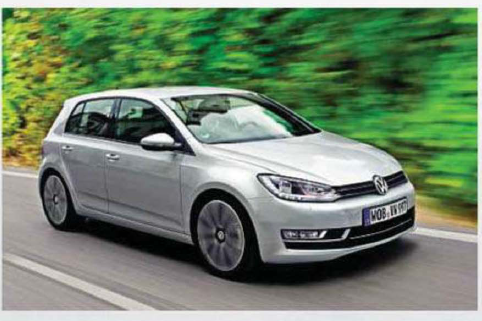
VW’S GOLF DEFINES

VW’S GOLF DEFINES its sector like no other. Here is a hatch which drips with middle- class values — it’s the default choice for buyers from all walks of life and depths of pocket. So VW’s not about to risk anything too outlandish with this year’s all-new Golf. it’s the seventh Model to roll out of Wolfsburg since the Mk1 replaced the Beetle in 1974, and it’s hard to think of a more polished all-rounder.These artist’s impressions are said to be almost identical to the finished Golf we’ll see at the Paris motor in September. 

    Although this sober suit looks evolutionary, it hides a major secret: the hardware is very different. The cheaper-to-build MQB architecture is VW’s new global platform to service everything from future Polo up to Passat.It’s lighter, weighing in at closer to 1997's Golf Mk.4 thanks to more aluminium. Most petrol engines will be 1.2 or 1.4 TSIs, the latter with cylinder deactivation; diesels are 1.6 0r 2.0 TDIs, stretching from 66kW t0 13,9kW. Clever tech includes an electronic front-axle diff for the next GTI, ‘haptic` multi-media touchscreens and an electric Golfthat’s expected to appear in 2013.
Golf Mk7: a back road or Freeway near you soon.Styling evolves both gracefully and glacially


THE CLEVER COST-SAVING BIT 
VW GROUPS MQB platform or Modular Transverse Matrix will underpin transverse-engined models across the group’s four brands, standardising both assembly and many vehicle components and parameters like the HVAC unit, steering system, front axle and engine installation angle whilst offering access to 20 new technologies previously only available in larger, more expensive segments. A new engine series boasting reduced mass (by upto 22kg) and greater efficiency will reduce the Group’s engine and gearbox variants in the MQB system  by approximately 90 percent.

PRICE :From R250 000 (est)
ON SALES : March 2015 (est)
ENGINES :1.2- and 1.4-litre petrol,1.6— and 2.0-litre turbodiesel
VERDICT : More ofthe usual restrained polish.


Minggu, 25 Maret 2012

FIAT'S CHRYSLER GAMBLE PAYS OFF

FIAT'S CHRYSLER GAMBLE PAYS OFF
Sergio Marchionne gambles big-time to acquire Chrysler.Now his bigger problem is Fiat

SERGIO MARCHIONNE LIKES t0 beat the odds. When he became Fiat CEO in 2004, the autos division was faced with a €1O billion debt and motoring commentators writing the group’s obituary — but he turned it around. In 2009, with Chrysler heading f0r bankruptcy, Marchionne seized the opportunity to acquire Detroit’s minnow, soon to be rinsed of its crippling overcapacity and punishing union agreements. Again commentators were sceptical, but on 1 February, Fiat published its full-year results, the first incorporating Chrysler. Marchi0nne could indulge himself in a moment’s vindicati0n: Fiat-Chrysler’s full—year pr0f1ts reached €1.65 billion, compared with €222 million in 2010.

The group hit or exceeded all Miarchionne’s targets for revenues, cperating margin, net debt and liquidity. Chrysler made a massive contribu- tion: it was the big money—spinner along with the group’s Brazilian operation, which has sewn up 22% 0f the market. Bankruptcy has made Chrysler a leaner, me aner business, which can make m0ney on far fewer car sales. In 2007, Chrysler was bleeding money with 13,% 0f a 16 milli0n US vehicle market; in 2011, it had 10.5% o fa 13m market, yet posted a trading pr0i:1t 0f €1.3 billion over the seven months its accounts were pooled with Fiat’s. Not had for a company which cost $2 billi0n (plus tech costs and management time) to acquire.

    ‘Marchiorme had the insight and guts to move For Chrysler in the trough he spotted potential that the rest of the industry failed to see,’ says autos analyst Max Warburton of Bernstein Research. ‘We all overlooked that massive government intervention would dramatically lower Chrysler’s costs and slash [US] industry capacity. Combine controlled costs with high-priced vehicles like the Dodge Ram pick-up and ]eep Grand Cherokee and you have a profitable business' Chrysler`s positive results paper over the cracks at Fiat’s European operations. While Europe provides 37% ofthe group’s revenues, it accounts for just 6% ofthe operating profits.

    The mass market car brands-Fiat, Lancia, Alfa Romeo - dug a half-billion euro hole. ‘In Europe, there are too many brands, there’s too much capacity, price-cutting has gone bananas-so no-one is making any money,’ says a Fiat source. Ford is in the same boat: its European operation lost $19om in the final quarter of last year, offset by big profits in America.Whereas Detroit’s implosion cut capacity by 13,% to 14.5m units, only two plants in Europe GM’s Antwerp and Eiat’s Termini Imerese facilities-have been shuttered since 2008, although Mitsubishi plans to close its Dutch factory. According to Harbour Report’s manufacturing analysis, GM and Eiat’s actions barely made a dent on Europe`s annual capacity, which still stands at 24.61'1'LAS Marchionne admits, the European industrial machine still needs fixing.

    While overcapacity and Euro crises affect all makers, Fiat is espe cially vulnerable because of its reliance on the slumping Italian market,and its addig;ti0n t0 small cars and their ‘small profits,’ to quete Edsel Ford’s withering adage. Warburton estimates that Chrysler earns double Fiat’s average revenue per unit. ‘It’s pretty simple because Chrysler sells bigger vehicles at higher price points; the difference in build cost between small Fiats and bigger Chryslers is not as substantial as the price peint difference'Fiat needs to gain a foothold in the Golf segment, and then push upwards. Citroen has launched the DS brand in an attempt to boost its desirability - and prices- while Nissan’s crossovers are conquering market share across Europe.

    Fiat doesn’t need any more brands, but it will almost certainly explore crossover bodystyles like the Qashqai or DS 5, vehicles that ht neatly in the US market as jeeps or Dodges. ‘We are only going to come out of this mess if I have products that are successful for Fiat in segments where we’ve historically been uncompetitivef Marchionne told topCarbefore Christmas. ‘Look at the Bravo: I think it’s a great car but the Fiat brand has no credibility in that space. I have to go and find a credible basis on which to build an intrusion into German territory. a The Americans give me an industrial platform to get that done.’

    And the partnerships may not end with Chrysler: Marchionne promises t0 continue working with Suzuki following the implosion of its Volkswagen alliance —-“and with others’. He is determined to push Fiat Group to 5.5m units a year to generate full economies of scale — in 2011, Chrysler took it to 4m. One matter high up the in-tray: Fiat needs a small car partner to replace General Motors for the next- generation Punto. If he pulls off another seismic roll ofthe dice, maybe the car industry won’t be so surprised this time. After all, he’s got form.